A damp guest room, falling boiler pressure or an unexplained water bill can put rooms out of use. ADI investigates hidden leaks in hotels, guest houses and spas across Buckinghamshire, with access planned around your guests and maintenance team.
Leak detection services for Buckinghamshire hotels
Guest bathrooms and shared pipework
When water marks a bedroom ceiling, the source may be in the room above or further along a shared pipe run. Moisture readings, shower tests and camera inspection help separate a faulty fitting from leaking pipework before finishes are opened.
Repeated top-ups at the boiler can point to a hidden loss beneath corridor floors or behind bedroom walls. The engineer tests the relevant circuits and uses thermal imaging, tracer gas or acoustics to narrow down where the water is escaping.
A meter that keeps moving when little water is being used needs investigating. We trace buried supplies, including pipe runs to annexes and garden buildings, and check boosted systems where pumps keep cycling.
For a pool that needs frequent topping up, the survey can check the shell, fittings and filtration pipework. Testing each part separately helps establish whether the loss is inside the pool or along a buried pipe.
Rainwater can travel through a roof or wall before it appears in a guest room. ADI investigates the entry point and records the findings for your roofing or building contractor. Roof and structural repairs are outside this service.
Water beneath a kitchen floor may come from a supply pipe, a waste connection or a gully. Dye testing and drain cameras help trace the source, with any appliance fault reported for your equipment contractor.
The useful starting point is what your team has noticed, where it happens and when. Tell the office about occupied rooms, breakfast service and any areas that need an escort so access can be discussed before the visit.
1
Step 1: Describe the problem
Call with the postcode, affected rooms and any changes in meter readings, pressure or pool level.
2
Step 2: Agree the survey
The office explains the scope, quote and current availability. Flag locked plant rooms and guest access restrictions.
3
Step 3: Walk the building
Your maintenance contact shows the engineer the symptoms, meter, stopcocks and relevant plant.
4
Step 4: Test the source
The engineer selects the methods for the pipework and finishes. Any water or heating isolation is agreed with your team.
5
Step 5: Get a written report
Photographs, findings and recommendations give your contractor or insurer a record of the investigation.
6
Step 6: Discuss the repair
Pipework, drain and pool repairs can be quoted separately. Roof and building repairs go to your own contractor.
ADI’s engineers combine these seven methods to locate hidden leaks before opening the affected area.
Tracer gas
A safe, non-flammable hydrogen and nitrogen mix is put into the pipe or void. It escapes at the leak, rises through the floor or wall, and a detector picks it up at the surface.
In a hotel: Buried supply runs, heating pipes under screeds, pool lines and flat roofs.
Acoustic listening
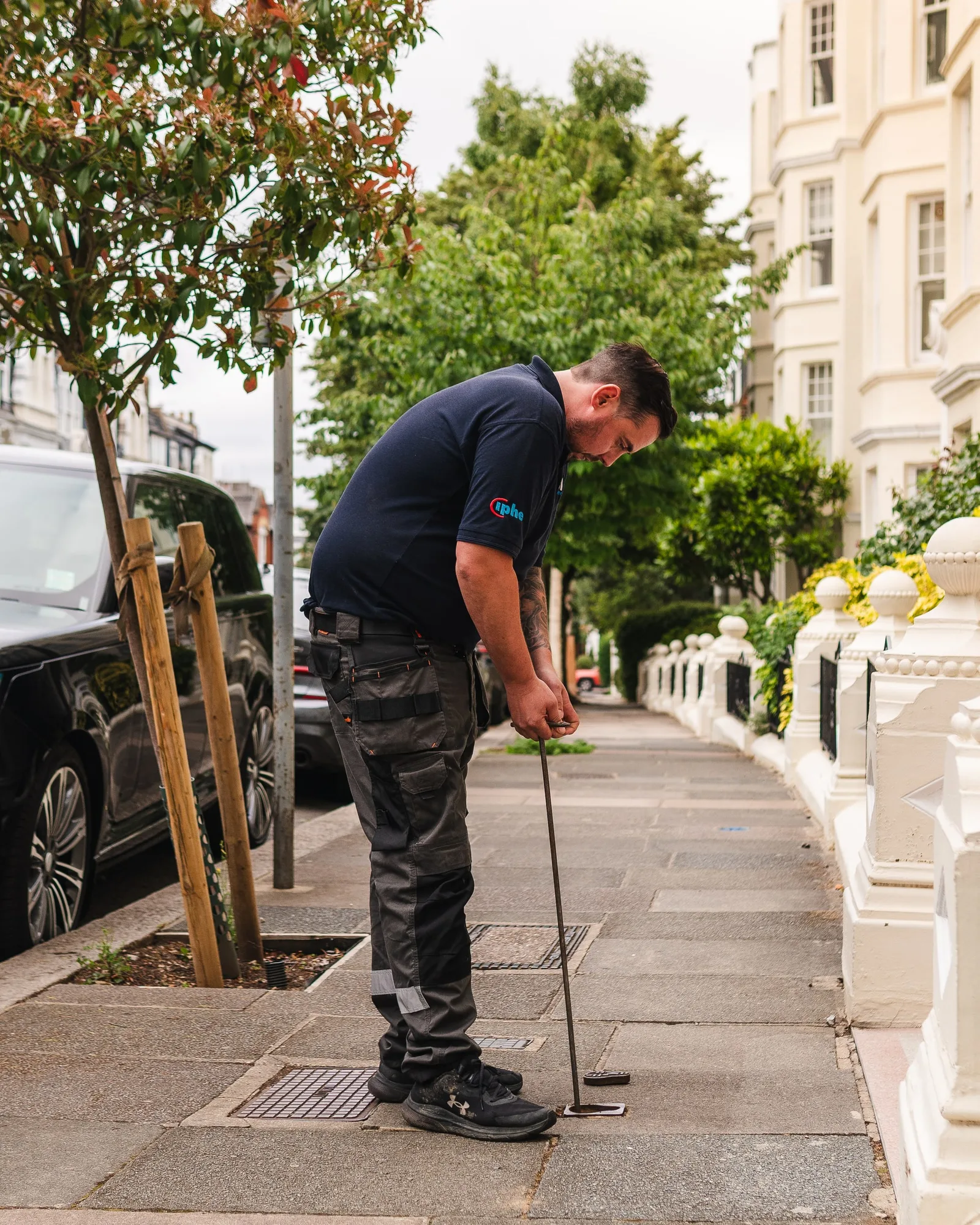
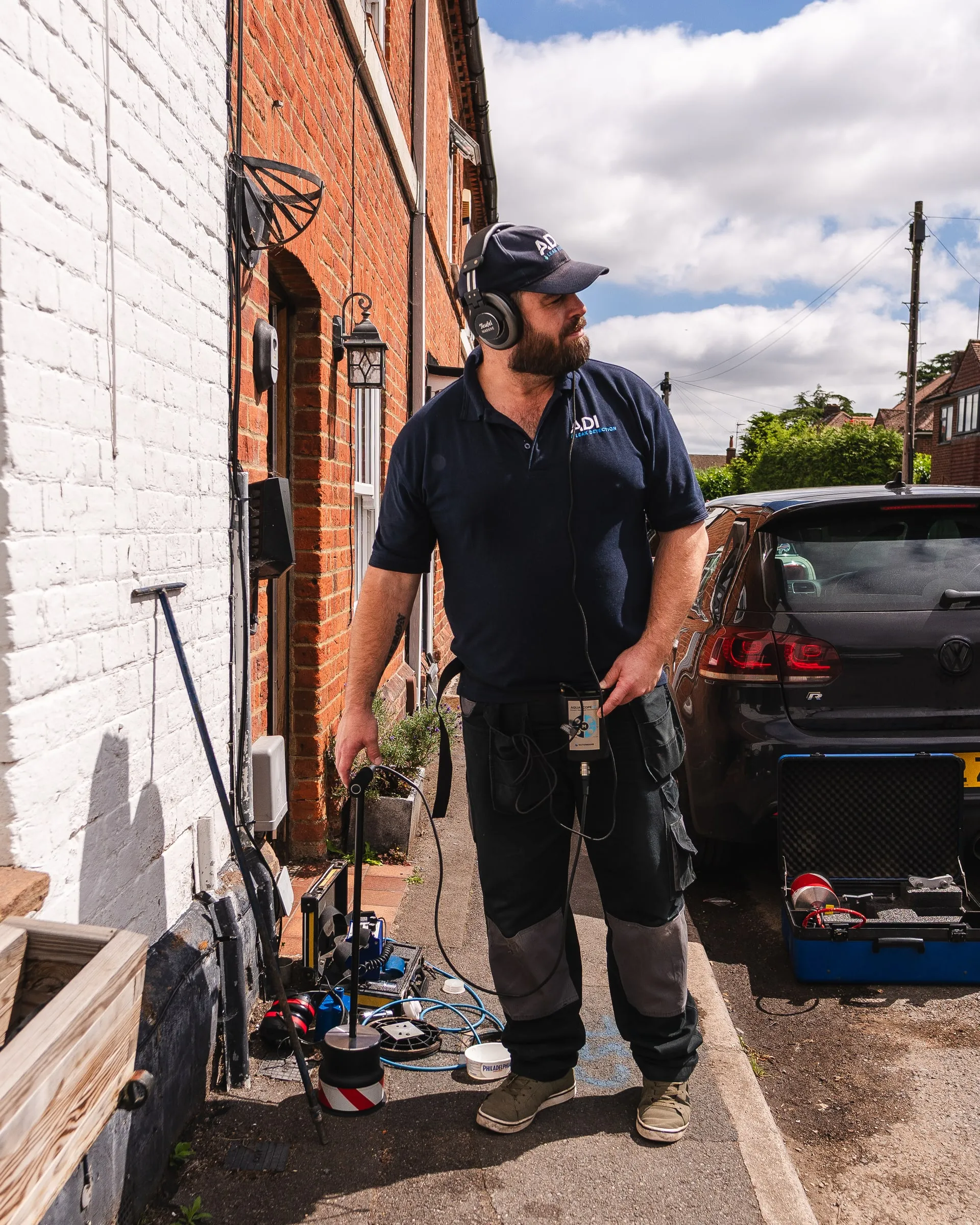
Ground and pipe microphones amplify the sound of water escaping under pressure. The loudest point is the leak.
In a hotel: Car parks, service yards, corridors over buried pipework.
Leak-noise correlation
Two sensors clamped to a pipe record the leak noise from either side; the correlator works out how far along the pipe the leak sits.
In a hotel: Long water mains and supplies to outbuildings, where listening alone is slow.
Thermal imaging
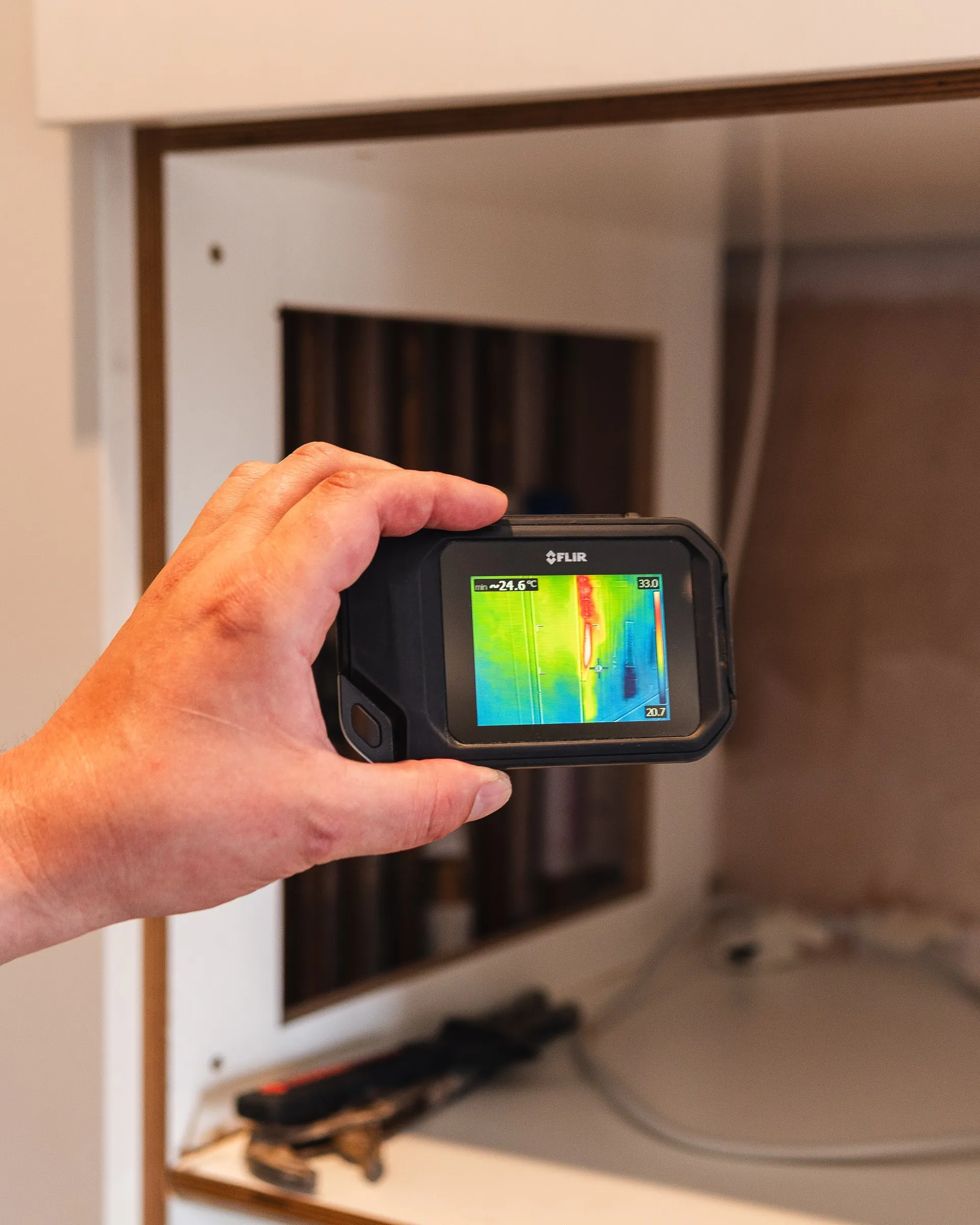
A thermal camera shows warm pipes and cold, wet patches behind finished surfaces. It scans large areas quickly and is always paired with another method to confirm.
In a hotel: Heating runs in guest floors, ceilings under bathrooms, flat roofs by drone.
Borescope cameras
A camera on a flexible tube goes through a small, easily made-good hole to look inside a void, a bath panel or a boxed-in riser.
In a hotel: Confirming a leak behind tiling or panelling before anything larger is opened.
Moisture mapping
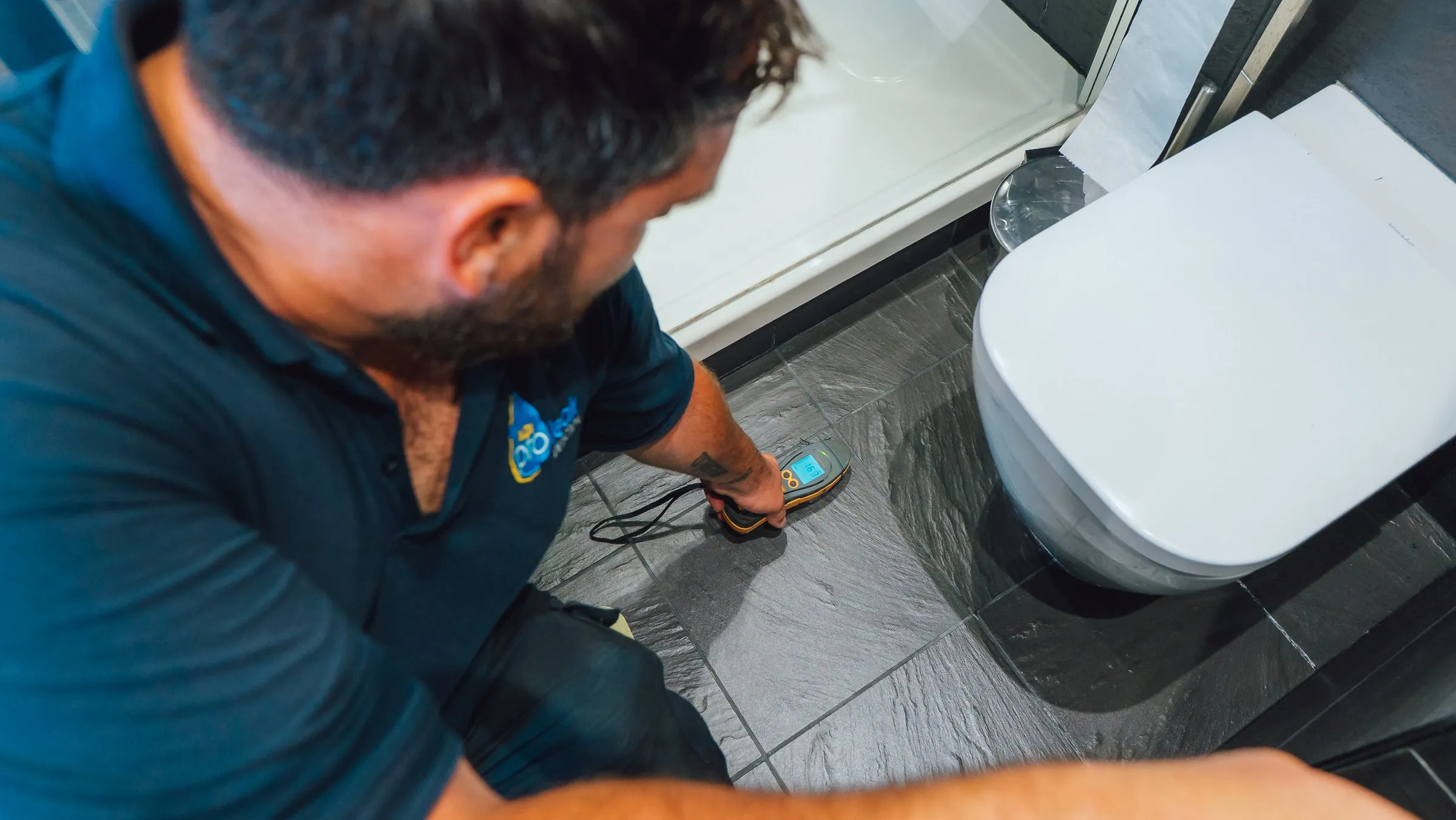
Pin and pinless meters read moisture in walls, floors and ceilings. Plotted room by room, the readings show where the water has travelled and where it started.
In a hotel: Deciding which of several stacked bathrooms is the source.
Pressure testing
Each circuit is isolated and held under pressure. A drop confirms a leak on that circuit; a steady gauge rules it out, and proves a repair afterwards.
In a hotel: Plant rooms with several circuits, and proving a repair before the room goes back into service.
Thermal imaging · Service cupboard
Moisture mapping · Guest bathroom
Acoustic listening · Ground microphone
Areas we cover in Buckinghamshire
Amersham
Aylesbury
Beaconsfield
Bletchley
Buckingham
Burnham
Chesham
Gerrards Cross
High Wycombe
Marlow
Milton Keynes
Newport Pagnell
Olney
Princes Risborough
Taplow
Wendover
A survey planned around your property
The access plan depends on how the building is used. The same survey needs a different approach in a small guest house, a hotel with conference guests or a property with extensive grounds.
Hotels with occupied bedrooms
Tell us which rooms are affected and when they are available. Housekeeping observations can help establish whether the leak follows shower use, heating or rainfall.
Guest houses, inns and boutique hotels
In a smaller building, one closed room can matter. We use non-invasive tests first and explain where targeted access may be needed to confirm or repair the fault.
Country hotels and separate annexes
Grounds, garden taps and detached accommodation can share buried supplies. Plans of the pipe routes, if you have them, are useful alongside meter readings and the location of stopcocks.
Spa hotels and resorts
Pool water loss, filtration pipework and guest hot-water systems need to be considered separately. Tell the office which facilities are affected and any limits on access or isolation.
Hotel Leak Detection, a specialist service from ADI Leak Detection. Our hotel surveys draw on ADI’s engineers and specialist equipment across England, Scotland and Wales.
Trustpilot TrustScore
4.7
Reviews
1600+
Engineers nationwide:
25+
Public liability insurance
£5m
ADI’s Trustpilot figures were checked on 14 September 2026. These reviews relate to ADI’s wider service. About the provider.
Hamaad from ADI was great. He was very thorough with his work and communicated everything very clearly. He was able to locate the leak and provided a detailed report that could be shared with my insurer. He went above and beyond to answer questions about my insurance claim from both me and my insurer. I'd highly recommend their services.
We had a major water leak of approximately 220 litres per hour and, with a holiday booked only a few days later, we urgently needed someone to find and repair it. […] Frank arrived at our house. He was extremely polite, professional and clearly very experienced. He quickly set up the equipment, carried out a tracer gas test and pinpointed the leak to an area just outside our garage underneath the driveway. […] The whole job, from arriving at our house to finding and repairing a 220 litre-per-hour leak, was completed in around three hours.
Craig was punctual, knowledgeable, efficient and very tidy. This is a large property and he traced leaks and sources of damp in walls and in heating pipes under concrete floors.
Robert Gires attended our property and was extremely professional, knowledgeable and meticulous throughout the whole process. He carefully removed part of the kitchen cabinet to gain access, dug into the floor to properly investigate and assess the leak, and explained what he was doing along the way. What impressed me most was the care he took with our property. Once the investigation was completed, Robert put everything back in place neatly and left the area tidy.
Do you cover Milton Keynes as well as the rest of Buckinghamshire?
Yes. This page covers the ceremonial county, including Milton Keynes, Bletchley, Newport Pagnell and Olney as well as the Buckinghamshire Council area. The named places are examples. Call with your hotel’s postcode for current availability.
Can a survey take place while guests are staying?
Access is planned with your team around occupied rooms and the areas that need testing. Tell the office about check-in, housekeeping and any facilities that must stay in use. Some tests require water or heating to be isolated for a period, and the timing is agreed with your maintenance contact.
What if the damp patch is several rooms away from the leak?
Water can travel along pipework, floors and ceiling voids before it becomes visible. The engineer uses the pattern of moisture and the relevant pipe circuits to investigate the source. Access may be needed above, below or beside the room where the stain appears.
Can you investigate a high bill when there is no visible leak?
Yes. Meter readings, occupancy changes and details of equipment using water help establish what has changed. The survey can then check incoming mains, boosted supplies and internal circuits. If the hotel has annexes or garden buildings on the same meter, include them in the booking discussion.
Will the survey include a repair?
Repairs are quoted separately from the survey. ADI can quote for pipework, drainage and pool repairs where appropriate. Roof and building-fabric leaks are located and reported for your roofer or building contractor to repair.
What can we give our insurer after the visit?
The report includes photographs, findings and recommendations. Commercial jobs also have a risk assessment and method statement. Ask your insurer what evidence they require before booking and pass that information to the office; the survey does not determine what your policy will pay.
Discuss a hotel leak in Buckinghamshire
Have the postcode, the symptoms and any access restrictions to hand. ADI’s office team will talk through the survey, quote and current availability for your property.